Sourcing Wooden Puzzles and Tabletop Learning Games: A Wholesale Buyer's Guide
By Yunhe Kid Times Toys & Games Factory, a wooden toy manufacturer in Yunhe, Zhejiang, China
Puzzles and wooden tabletop games carry some of the best margins in the wooden category. Most of that margin is lost in the details: piece count, piece size, artwork control and packaging.
Why this category earns its shelf space
A well chosen wooden puzzle has three commercial advantages over larger furniture style wooden toys. It is a low freight item: a tray puzzle adds a few hundred grams to the carton, so a container carries a lot of retail value. It repeats, because a child who finishes one puzzle is a customer for the next title. And it stretches across price tiers without a redesign, since the same board can be a twelve piece puzzle for one market and a twenty-four piece puzzle for another.
The sub-categories, and what each one asks of the factory
Tray and jigsaw puzzles: board thickness, print method and consistent cut lines matter more than the artwork itself.
Knob and peg puzzles: the knob construction decides both safety and price, and a screwed and glued knob costs more and lasts longer than a glued dowel.
Counting and number boards: symbol printing quality, and how well the pieces sit in their recesses.
Stacking, lacing and balancing games: sanding quality on rounded parts, and the tolerances that keep a tower standing.
Magnetic and fishing games: magnet retention, cord length, and the extra hazard rules that come with loose parts.
Wooden board games: hinged or boxed construction, printed rule sheets, and packaging that can hold its own beside established board game brands.
Control the artwork, because that is where the value sits
In this category the woodwork is often the cheapest part of the product and the graphics carry the price. Decide early whether panels are printed in house or applied as printed paper on board, because the two routes have different minimum quantities and different colour tolerances. Then lock the artwork rules: bleed on every printed panel, a single colour reference for the whole range, and a proof approved before the print run rather than at the packing table.
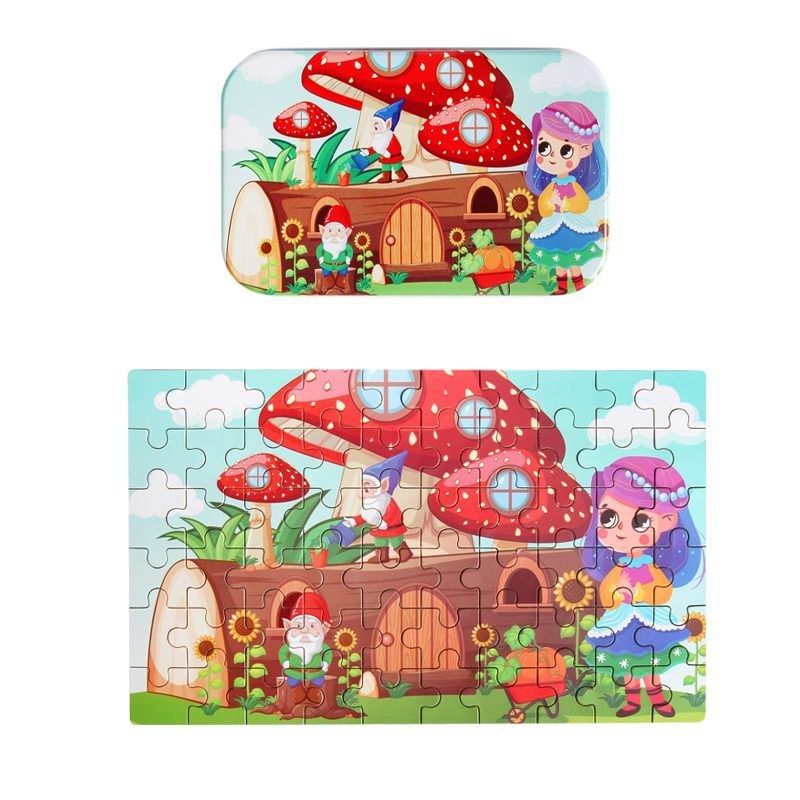
A multi-colour jigsaw title. Print method and cut consistency decide how the finished range feels.
Piece count, age grade and the small parts question
A twelve piece puzzle and a twenty-four piece puzzle can be the same board with different tooling and different packaging, but they are not the same product to a regulator. Anything removable has to satisfy the small parts requirements for the declared age grade, which is why most wooden puzzles carry a three years and over mark. When the target is the under-three shelf the design changes: thicker pieces, larger knobs, no loose magnets, and test documentation that names that age group.
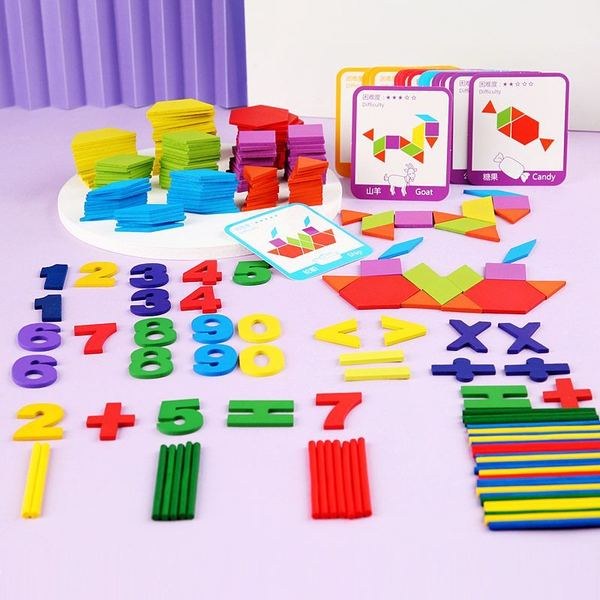
A counting and number set: symbol printing, recess fit and piece size all define the age grade.
Packaging decides the shelf price
Retail box or shrink wrapped board: the box costs more and supports a higher price.
An insert that stops the pieces rattling, so the product feels solid in the hand.
A multilingual back panel written for your market, not translated later.
A barcode and importer panel that satisfy your retailer without a sticker.
A mailer or crush resistant outer if any volume moves through e-commerce.
Make MOQ work across a range, not one title at a time
Wholesale buyers usually want six titles, not one, which is exactly where the minimum order quantity hurts. The practical answer is to standardise: shared board sizes, one timber, one paint batch for the whole range, one carton footprint, and one printing method. That way a small order spreads its setup cost over several SKUs and the factory can schedule them as a single run. Our wooden toys wholesale notes describe how a mixed range is quoted, and the wooden puzzle manufacturing page covers the tooling that drives it.
Quality checks specific to this category
Fit tolerance: pieces placed and removed fifty times without loosening or binding.
Print registration and bleed, checked on the finished panel rather than the artwork file.
Sanding on edges and inside every cutout, including the underside nobody photographs.
Warp and moisture: boards that are not dried properly curl in a heated room.
Piece count verification per box before the carton is sealed.
A packed reference sample retained at the factory for every title in the range.
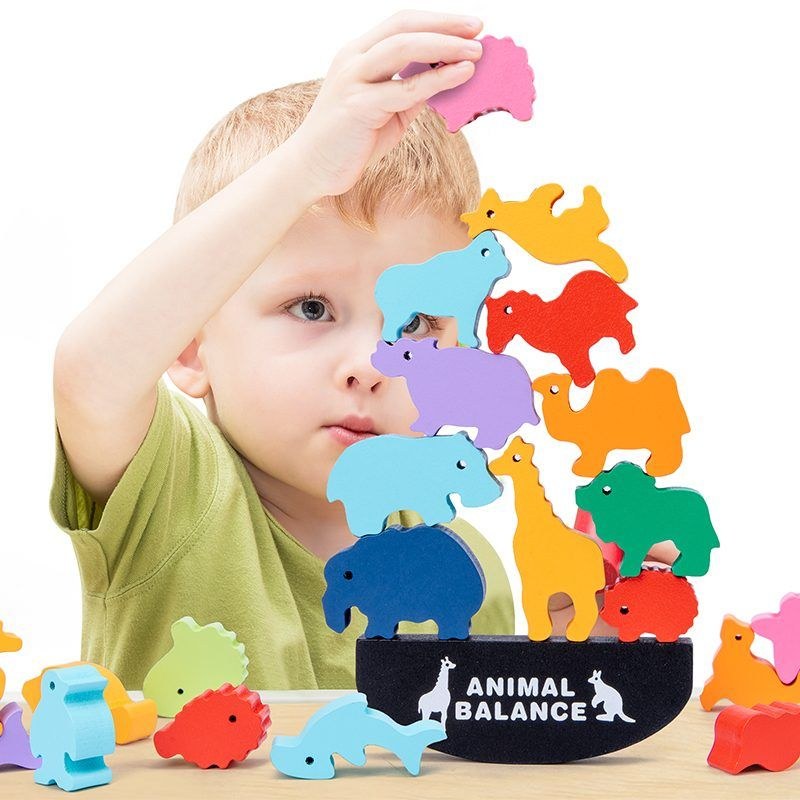
Balancing and stacking games sell alongside puzzles and use the same board and paint infrastructure.
A cheap way to test three titles before a container
Commission one pre-production sample per title from a single factory, with the same board specification, the same finish and the same box construction. Put them in front of real children, and put them in front of your buyers with a price for a full run and a price for a mixed range. Three samples at this stage cost less than one wrong container later, and they tell you whether the supplier understands the difference between an artwork change and a tooling change. Buyers planning a private label puzzle line can also read our OEM wooden toys notes.
About the author: Yunhe Kid Times Toys & Games Factory is a wooden toy manufacturer and exporter in Yunhe, Zhejiang, China. We have produced educational wooden toys for importers, wholesalers and retail brands since 2007, and we support OEM, ODM and private label programmes with in-house design, tooling and packaging. Products are manufactured to EN 71 and ASTM F963 requirements.
161 Zhongshan West Road, Yunhe County, Lishui, Zhejiang 324500, China
[email protected] | +86-578-5123022 | WhatsApp +86-18268935785