Un énoncé qui affirme une violation des lois de la nature est soit faux comme fait physique, soit hors du domaine des faits. Il ne peut être cru que par quelqu'un qui renonce, du même coup, à pouvoir savoir quoi que ce soit, y compris ce qu'il affirme.
Pasteblog — paste a link, photo or thought and become a blog at yourname.pasteblog.com
Worth reading now
Read more
Résilier sa Freebox en ligne : le lien que Free ne met pas dans votre Espace Abonné
En résumé : Free dispose d'un parcours de résiliation entièrement en ligne, sans impression ni courrier recommandé. Il n'est pas accessible depuis l'entrée « Plus besoin de mon abonnement » de votre Espace Abonné, qui vous oriente vers un formulaire papier. Le lien direct est :
https://subscribe.free.fr/login/?link=resilonline
Vous vous connectez avec vos identifiants Freebox habituels et vous arrivez directement sur le formulaire.
Sommaire
Le problème : deux parcours, un seul est en ligne
Free maintient deux chemins de résiliation distincts, servis par deux scripts différents.
Le parcours papier, celui que vous trouvez naturellement
Depuis votre Espace Abonné, le menu Mon abonnement > Plus besoin de mon abonnement pointe vers resiliation_tel.pl. Ce parcours vous fait choisir un motif, un opérateur de destination et une date, puis génère un PDF que vous devez imprimer, signer à la main et envoyer en lettre recommandée avec accusé de réception à :
PUBLIDISPATCH / FREE RSL
BP 40090
91003 EVRY CEDEX
L'écran de confirmation est explicite : « Merci d'avoir téléchargé le formulaire de résiliation. Celui-ci est à renvoyer par courrier recommandé avec accusé de réception à l'adresse indiquée. »
Comptez le prix du recommandé, le déplacement à La Poste, et plusieurs jours d'acheminement avant que votre demande n'existe dans le système de Free.
Le parcours en ligne, celui qui est obligatoire
Le pied de page de free.fr contient un lien vers ?link=resilonline, qui redirige après authentification vers resiliation_online.pl. C'est un script entièrement différent, avec un vrai formulaire web validé en ligne. Aucun papier, aucun recommandé, aucune signature manuscrite.
Rooftop Pool
Well; I work in a fancier bar, pouring fancier drinks, but she must make more in her little dive. I think this to myself while also shaking my head remembering that she takes a little extra for herself from every tourist that comes into her place.
Summer gave me the door code and said I should come by a little after 3p so the pool on the roof of her building would be empty since nobody used it after lunch time and we’d have it all to ourselves. I don’t really “Lay out” so an invite to do that at a public pool didn’t really appeal to me. But since she assured me there wouldn’t be a lot of kids running around I gave in.
I didn’t want to use the elevator so I hit the stairs. Only 5 floors I can do it.
(my mind wandered) I mean… Plus… it’s Thursday and I have the day off but so does she; so it’s not like I’ll be headed into watch her at work today (like I did last night). I was worried about going in to see her again, the night after she let me ravage her on the beach. But I would normally have gone to her bar on Wednesday and I didn’t want her to think anything had changed for the worse… Since everything instantly changed for the better. It was cute. When I walked in she smiled as though I was a long lost lover returning from overseas. That alone made me melt.
The staircase was dark. And the vibe didn’t fit the outside of the building. White-ish green light and glossy white wall with open uncured and very stained concrete stairs. Seeing her on her personal time might not have been the best idea.
I got to the matte grey metal door and turned the handle. The metal was warm and it sounded as if it hadn’t been turned in a decade. The door’s hinges creaked and I looked up to inspect them; rusted, naturally. As I pulled the squeal they yelled out increased only as the bottom of the metal door scraped against the concrete. Well I guess everyone will know I’m here.

В свободното си време понякога се занимамвам с електроника или отивам на планина. Там обичам да изкачвам върхове и да отивам на непознати за мен места. така правяоще от малак заедно с роднините ми. Харесвам екскурзиите сред природа и други исторически забележителности.
Обикновено отивам на село през събота или неделя там
Моето лято
Това лято беше едно от най-хубавите ми и изпълнено с много приятни моменти. След края на учебната година най-накрая имах възможност да си почина, да се забавлявам и да прекарвам повече време с приятелите и семейството си. Ваканцията мина много бързо, защото почти всеки ден имах нещо интересно за правене.
Едно от най-хубавите неща през лятото беше, че няколко пъти ходих в Гърция. Всеки път беше различно и много приятно. Харесваше ми да пътувам дотам, да виждам нови места и да прекарвам време край морето. Най-много ми харесваше да бъда на плажа, да плувам в морето и просто да се наслаждавам на хубавото време. Вечер също беше много приятно, защото можехме да се разхождаме и да разглеждаме различни места.
Освен пътуванията до Гърция, през лятото често излизах и с приятелите си. Срещахме се навън, разхождахме се, говорехме си и се забавлявахме. Понякога играехме игри, а друг път просто прекарвахме време заедно. Именно тези обикновени моменти с приятелите ми направиха ваканцията още по-приятна.
Имаше и дни, в които оставах вкъщи и си почивах. Гледах филми, играех игри или просто се наслаждавах на свободното си време. След дългата учебна година беше приятно да нямам домашни и да мога да правя нещата, които ми харесват.
Като цяло, това лято беше изпълнено с много забавления, пътувания и хубави спомени. Най-много ще запомня времето в Гърция и моментите, които прекарах с приятелите си. Радвам се, че имах толкова хубава ваканция и се надявам следващото лято да бъде още по-интересно и незабравимо.
Bartenders.
I had been watching her since she walked in. I’d seen her more than a few times before at the little run down bar she works at the down the road in town. But there’s no way she’ll recognize me. I’m a jeans and a T-shirt kind of guy whenever I’m not in this place. Come to think of it. I’ve never seen her like this before either.
I mean, I’d taken notice of her body. she wears short jean shorts and little white t shirts and wife beaters on her shifts. But tonight shes in a little dress that is like two almost see through slices of thin caramel colored fabric held together by three knots of thin down each side. Had I just glanced I would have thought she was stark naked the way her dress blends with her skin tone. Though there isn’t a man on earth that could just glance at her without stopping to take in the entire view.
After what seemed like forever she took the long flat steps up from the front of our expansive restaurant, heading to my bar. Each step revealing a sexy leg pulling and straining against the ties of that dress, just wanting to revel more and more. My thoughts drifting quickly, sprialing down into a darker place of what I would do with this gem if I could have her all to myself for an evening.
“Hell of a view you’ve got here” god damn it her voice was soft and sweet but so full of confidence.
“Me or the water?” I’d replied with all the smooth practice of someone who’s been the hunting trophy of more than a few packs of single and sometimes married ladies on vacation.
“yeah fuck the moon, I was talking about you” she smiled slightly and ripped her eye contact away from mine and asked me for a martini. “easy. Not fussy about the booze, but definitely gin”
I turned around to grab a shaker tin and appreciated the good fortune I had to be a bartender in such an amazing spot. Out behind my bar was an expanse of black sand beach, held private for the use of the guests of my hotel. But nobody used it at night and tonight the full moon was just beginning to settle down from it’s zenith and provide a breathtaking backdrop for the rest of my night.
AI Agents in Business Operations: Start with Clear Boundaries
AI agents can coordinate several steps in a business workflow, but useful deployment begins with limits rather than maximum autonomy. A team should define what the agent may read, what it may suggest, and what requires approval.
Choose a narrow job
A good first use case has a clear trigger and a measurable result. An agent might collect information from a customer request, prepare a draft response, create a follow-up task, or route a case to the right person. Avoid starting with actions that change financial records or customer accounts without review.
Give the agent approved sources
An agent is more reliable when it works from current product information, documented policies, and clear workflow instructions. Identify which sources it may use and how often they are updated. If information is missing, the safe response is to ask for clarification or involve a person.
Design the approval path
Human review should be easy to trigger. Set rules for sensitive topics, uncertain answers, unusual requests, and explicit customer requests for support. Preserve the context gathered by the agent so a team member can act without starting again.
Measure and improve
Track successful completions, corrections, handoffs, repeat contacts, and time saved. Review failures as learning signals. They may show that the agent needs a better source, a clearer instruction, or a narrower scope.
Businesses exploring AI agents and practical workflow automation can learn more about SudoLeads at https://sudoleads.com/.
The goal is not to remove people from every process. It is to make routine coordination easier while keeping important decisions understandable and accountable.
Ma liste de films
Ghost in the shell
How Agencies Should Log Indexing Experiments in Client Spreadsheets
Indexing work becomes difficult to explain when an agency’s spreadsheet records only a URL and a green “submitted” label. A client cannot tell whether the page was ready, what the team changed, which search engine was tested, or whether a later observation actually says anything about indexing.
A better spreadsheet treats every indexing request as an experiment with a defined input, a controlled action, and an observation that may remain inconclusive. That structure gives account managers something accurate to report without turning a search engine’s decision into a promise.
START WITH AN EXPERIMENT ID, NOT A STATUS COLOR
Give each row a durable experiment ID, such as ACME-2026-0916-014. Keep it separate from the URL because one URL may be tested again after a technical change. Record the client, site, owner, request date, and a short hypothesis: after the canonical and internal-link fixes, this product page should be easier for crawlers to discover. A hypothesis makes the row useful even when the outcome is not observed. It also discourages retroactively rewriting history to make a campaign look successful.
USE COLUMNS THAT SEPARATE INPUTS, ACTIONS, AND OBSERVATIONS
A practical agency sheet can use these groups of columns.
Identity and scope: experiment ID; client and site; submitted URL and final URL after redirects; page type; search engine scope; request owner.
Readiness inputs: canonical result; HTTP response and accessibility; robots directives; sitemap presence; internal-link evidence; duplicate, thin-page, or soft-404 check; readiness decision (ready, blocked, or unknown); remediation owner and due date.
Action record: hypothesis; change made before the attempt; queue or priority; attempt timestamp; request ID or receipt; tool used; evidence URL or screenshot reference.
One Month Has Passed.
هومممم سلام =)) یه ماه گذشت آرمان، باورت میشه؟ یه ماهی که هر شبش رو توی بغلت خوابیدم، و هر دقیقش رو بوسیدمت.. راستش داشتم به این فکر میکردم که برات چی بنویسم چی بنویسم که بتونه اوج عشقم بهت رو برسونه.. ولی خیلی سخت بود…
Read moreMiddle School
Honestly, I never thought it would be this hard. Books described it as terrifying, movies as the “Worst years of my life”. Could it really be that bad?
Shocker. It was.
It was a whole whirlwind of losing friends, slipping away from everything. Keep reading for more.
Worth discovering
Featured blogs
Blogs kept by real people — follow a few to fill your feed.
Fais toutes les radios que tu veux
Tout d'un coup, une folle envie. Que tu me traverses. Demain, on y va, s’il te plaît. Je te laisserai accéder à tout ce que j'ignore. Promis. Que tu lises ce que je ne sais pas lire. Toutes les coupes. Tous les contrastes. Les zones d'opacité. Les fractures parfois oubliées. Je te promets mon immobilité. Tu verras, la pièce sera vidée de toute lumière naturelle. Il n'y aura que le gémissement…



naranjaanarajada
22 posts
Un énoncé qui affirme une violation des lois de la nature est soit faux comme fait physique, soit hors du domaine des faits. Il ne peut être cru que par quelqu'un qui renonce, du même coup, à pouvoir savoir quoi que ce soit, y compris ce qu'il affirme.
Ma liste de films
Ghost in the shell

Ok, rappelle-toi que, en fait, un dimanche raté, c'est un lundi coupable et qui ne rayonne pas.

daniel
15 posts
Liposuction in Riyadh for Abdominal and Flank Fat
Abdominal and flank fat can be difficult to reduce, even when a person follows a balanced diet and exercises regularly. These areas can influence the appearance of the entire midsection, making the waist look less defined or creating an uneven transition between the abdomen, sides, and hips. liposuction costs riyadh can be considered for suitable individuals who want to address localized fat…
Why Do Dark Circles Become More Noticeable With Age?
Dark circles can become more visible as the skin and tissues around the eyes gradually change with age. Although dark circles can occur at any stage of life, aging may introduce several factors that make the under-eye area appear darker, thinner, or more shadowed. Reduced collagen, changes in facial volume, increased pigmentation, and greater visibility of blood vessels can all contribute…
What to Expect During Recovery After Rhinoplasty in Riyadh
Recovery is an important part of the nose reshaping journey. After rhinoplasty, the nasal tissues need time to heal, swelling needs to settle, and the nose gradually adapts to its new structure. Knowing what to expect can help patients prepare for the healing period and follow postoperative instructions appropriately. Rhinoplasty in Riyadh ( كم سعر عملية تجميل الأنف في السعودية ) involves an…
How Liposuction Supports Modern Body Contouring Goals
Modern body contouring focuses on creating balanced, natural-looking proportions rather than simply reducing body weight. Many people maintain healthy lifestyle habits but still notice localized fat deposits that are resistant to diet and exercise. Liposuction in Riyadh ( كم سعر عملية شفط الدهون في السعودية ) can support contemporary body contouring goals by targeting these specific areas and…

x2eppt30
10 posts
Best SEO Audit Services in Sheridan, Wyoming
Best SEO Audit Services in Sheridan, Wyoming fix indexing bugs. Read how Trusted SEO Strategy Services in Sheridan, Wyoming improve site performance. Reviewing website code reveals hidden loading speed errors, broken internal links, and missing meta tags that block search visibility. Local business owners operating across regional commercial markets rely on Best SEO Audit Services in Sheridan…
Professional Business Income Tax Consultant in Lahore
Best Business Income Tax Consultant in Lahore files corporate returns. Read how a Trusted Personal Income Tax Consultant in Lahore manages taxes. Filing annual corporate returns requires ledger balancing, expense categorization, and tax code checks that prevent costly government penalties. Local enterprise owners operating across regional commercial markets rely on Best Business Income Tax…
Reliable Tilbud Damecykel 7 Gear in Husum denmark
Best tilbud Damecykel 7 Gear in Husum Denmark finds cheap commuter bikes. Read how Trusted Damecykel tilbud i Husum, Denmark saves money. Riding through town on a commuter bicycle requires internal hub maintenance, gear cable adjustments, and frame checks that prevent rust damage. Local riders living across northern neighborhoods shop for Best Tilbud Damecykel 7 Gear in Husum denmark sales to…
Reliable Tilbud Damecykel 7 Gear in Husum denmark
Best tilbud Damecykel 7 Gear in Husum Denmark finds cheap commuter bikes. Read how Trusted Damecykel tilbud i Husum, Denmark saves money. Riding through town on a commuter bicycle requires internal hub maintenance, gear cable adjustments, and frame checks that prevent rust damage. Local riders living across northern neighborhoods shop for Best Tilbud Damecykel 7 Gear in Husum denmark sales to…
laracrise
11 posts
A Complete Guide to Cash for Gold Services in Tennur, Trichy
Introduction Gold has long been considered a valuable asset that can provide financial support when needed. Whether you have old jewellery, unused ornaments, broken gold items, or pieces you no longer wear, selling them can be a practical way to access funds. Today, many people look for reliable gold buyers who can offer transparent valuation and convenient payment options. Choosing the right…
Plots for Building Your Home in Kalavasal – Find the Right Property
Introduction Choosing the right plot is an important first step when you plan to build your dream home. The location, road access, surroundings, plot size, and future development can all influence your decision. Kalavasal is a well-known residential area in Madurai, making it a practical location for people who want to build a comfortable home with good access to everyday facilities. Finding…
Trusted Computer Training Institute in Madurai
Introduction Choosing the right computer training institute can make a big difference in building practical skills and improving career opportunities. Students, fresh graduates, working professionals, and business owners can benefit from learning updated computer skills through structured training. A good institute should provide easy-to-understand lessons, practical sessions, experienced…
Trusted Real Estate Agency in Madurai
Introduction SAP skills are becoming increasingly useful for students, graduates, working professionals, and job seekers who want to build careers in business, finance, human resources, sales, logistics, and other professional fields. Learning SAP with practical guidance can help learners understand how businesses manage their daily operations using enterprise software. Choosing the right…

10e6sclv
8 posts
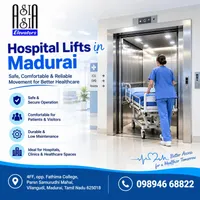
Complete Guide to Choosing the Right Elevator for Homes, Commercial and Industrial Buildings
Elevators have become an important part of modern residential, commercial, and industrial buildings. As cities continue to grow vertically, people and businesses need reliable solutions for moving passengers, goods, equipment, and materials between different floors. The right elevator can improve accessibility, convenience, productivity, and the overall functionality of a building. However…

What to Check Before Buying an Individual Home for Sale in Madurai
Buying a home is one of the biggest decisions a family makes. It is not simply about choosing a building with enough rooms. A good home should match your family's lifestyle, daily routine, budget, location preferences and long-term plans. For people searching for an Individual Home for Sale in Madurai , there are many factors to consider before making a final decision. Madurai offers different…

macrosoftgraphics
8 posts





maxwell
24 posts



Why AI English Learning Platforms Are Becoming Useful for CBSE Schools
English is an important part of school education, but students can have very different levels of language ability. Some learners may be comfortable reading English while needing more speaking practice. Others may need support with vocabulary, pronunciation, grammar, or comprehension. Digital learning tools are giving schools additional ways to address these differences. An AI English platform…

x8ocl64e
5 posts
Paste a link. Paste a photo. Paste a thought.
Each one becomes an entry on yourname.pasteblog.com.
“That is why some players look for an overwatch boosting option such as”

play.google.com
Suyog Academy: RPSC RSMSSB AI - Apps on Google Play
A poem
“Stopping by woods on a snowy…”

A note
A thought to keep…
suyogacademy.com
टेस्ट सीरीज़ 2026 — CET, RAS, Agniveer Y/GD/SSR | Suyog Academy
What a paste becomes
“That is why some players look for an overwatch boosting option such as”
play.google.com
Suyog Academy: RPSC RSMSSB AI - Apps on Google Play
AI-powered study notes, exam-level mock tests, deep analytics & Rajasthan ranks.
A poem
“Stopping by woods on a snowy…”
A note
A thought to keep…
suyogacademy.com
टेस्ट सीरीज़ 2026 — CET, RAS, Agniveer Y/GD/SSR | Suyog Academy
CET 12वीं, RAS Prelims, SSC CHSL/GD, Agniveer Vayu Y, Army GD और Navy SSR/INET मॉक टेस्ट सीरीज़।
A blog. Free. No ads.
- A real address.yourname.pasteblog.com. Yours. Not a profile in someone else’s feed.
- No login to start.Paste, see your blog. Sign in later to keep it.
- Yours forever.Every entry is on IPFS. Even your future ones, scheduled for the day you choose.
- Or your own domain.Connect yourdomain.com in one click. Visitors see your address - no Pasteblog branding, no chrome. Try it.
What can I paste?
Links, images, screenshots, paragraphs, YouTube and Vimeo URLs. Each is rendered as itself: a link card, a photo, a note, an embedded video.
Is it free?
Yes. The whole thing.
Can I publish anonymously?
Yes. Paste and publish without an account - the blog exists at a shareable URL with no name attached. Sign in to claim it later only if you want to.
Where does my blog live?
At yourname.pasteblog.com. A real address you can share - like a website, not a profile.
Do I need an account to start?
No. Paste and your blog exists. Sign in later to claim it and pick your name.
Who is it for?
People who want to publish fast without fighting a config screen. Personal notes, a journal, a light portfolio. Devs and writers who like Markdown and a quiet UI.
Is this a Substack alternative if I just want a blog, not a newsletter?
Yes. No email list, no subscribers to manage, no send button - just a blog at your own address. Readers can follow via RSS if they like, but nothing is pushed to inboxes.
How is it different from Medium?
No paywall, no metered reads, no algorithmic feed deciding who sees you. Your posts live on your own subdomain (or your own domain), not inside someone else’s platform.
A YouTube linkA photoA snippet of codeA tweetA paragraphA videoA Markdown fileAn HTML fileAn RSS feedA songA YouTube linkA photoA snippet of codeA tweetA paragraphA videoA Markdown fileAn HTML fileAn RSS feedA songA YouTube linkA photoA snippet of codeA tweetA paragraphA videoA Markdown fileAn HTML fileAn RSS feedA song
Drag, drop or paste any of these
See it in action
Press
⌘+V
Becomes
→ live at /b/yourblog
Paste to publish
Press Cmd/Ctrl+V on the home page and your clipboard becomes a real blog post - with its own URL - in under a second. A photo, a screenshot, an article URL, a YouTube link, a paragraph of text: paste it, get a page. You can also drag-and-drop a file from your desktop. No uploader, no setup, no account between paste and a live URL.
No sign-up between paste and a live URL
URLs unfurl into rich preview cards automatically
Claim the blog with an account when you're ready
Everything you can drag, paste, or import
No pre-conversion, no export-import. Drop a file on the page, or paste its contents — each type is recognized and inserted in the right place, with the right rendering.
Images
PNG, JPEG, WebP, GIF — plus HEIC from iPhones (auto-converted on upload).
Videos
MP4, WebM, MOV, MKV, AVI, OGG. Hosted for inline playback.
Audio
MP3, WAV, FLAC, AAC, M4A. Native HTML5 player embedded in the post.
Markdown & text
.md, .markdown, .txt — converted to rich blocks on import.
HTML
Drop a .html file: we host it as a sandboxed interactive embed.
Links
YouTube, Vimeo, articles — paste the URL, we generate a preview.
drop · anything
drop a file here
PNG
JPEG
WebP
MP4
MOV
MP3
.md
.txt
.html
Migrate from your old blog in one paste
Paste your existing RSS or Atom feed URL and we pull every post in. Images are downloaded and rehosted — no broken hot-links the day your old platform goes offline. Slugs and dates are preserved.
WordPress, Ghost, Substack, Medium — anything that exposes a feed
Images mirrored on our servers so the migrated archive is self-contained
Original publish dates and slugs kept — your old links stay meaningful
import · rss
WordPress✓
Substack✓
Ghost✓
Medium✓
https://oldblog.com/feed.xml
42 posts · 87 imagesdone
Photos: paste, drop, done
Drop a photo from your desktop, paste a screenshot from your clipboard, or drag a file straight onto the page. The image appears inline, full-quality, with a resize handle. Type**bold**, ## headings, or any other Markdown shortcut and it converts as you type. No image-host setup, no upload-then-paste-the-URL dance.
Paste images straight from your clipboard with Cmd/Ctrl+V
Drag-and-drop a file from your desktop, anywhere on the page
Resize handles, sketches, and freehand drawing built in
Same affordance for videos and audio - drop it, embed it
Markdown shortcuts work too if that's how you write
Untitled
Drop image hereor paste with Cmd/Ctrl+V
javascript
async function paste() {
  const blog = await clipboard.read()
  return 'live in 1s'
}
Code blocks, real ones
Paste a snippet — the editor detects the language and syntax-highlights it. Drop a .py, .js, .html, .json file from your desktop and the same thing happens. No fenced-markdown gymnastics, no copy-paste-reformat dance.
Auto-detected language, manual override available
Light or dark theme, picked per block
Drop a code file → instant code block with the right lang
Bring your own domain
Already own yourdomain.com? Connect it in one click and your blog serves at your own address, fully white-label. No Pasteblog logo, no header, no footer, no sign-in prompt. Just your archive and your writing.
Apex (yourdomain.com) and subdomains (www, blog…) supported
SSL certificate auto-issued and renewed for you
Visitors never see Pasteblog, your domain, your brand
🔒 yourdomain.com
@you
12 public documents
White-label
click
reading…
34 readers spent more than 10s on this post
Likes that count, even silent ones
Readers can tap the heart, but they don't have to. A post that holds a reader for more than ten seconds gets credited automatically. The number of dwell-likes counts as a quieter signal alongside the explicit ones, so the page rewards reading, not just clicking.
One-click likes, anonymous or signed-in
Dwell-time auto-likes after ~10 seconds in view
Reader counter shows how many people lingered
Password-protected blogs
Keep a blog public but gated: set one password and only readers who know it get in. Enter it once and you stay unlocked.
One password for the whole blog, share it with whoever you trust
Index, posts and RSS all stay behind the gate
Readers enter it once, then stay unlocked on their device
This blog is password-protected
Enter the password to read this blog.
Unlock