Why Aggregate Selection Matters in Ready-Mix Concrete Production
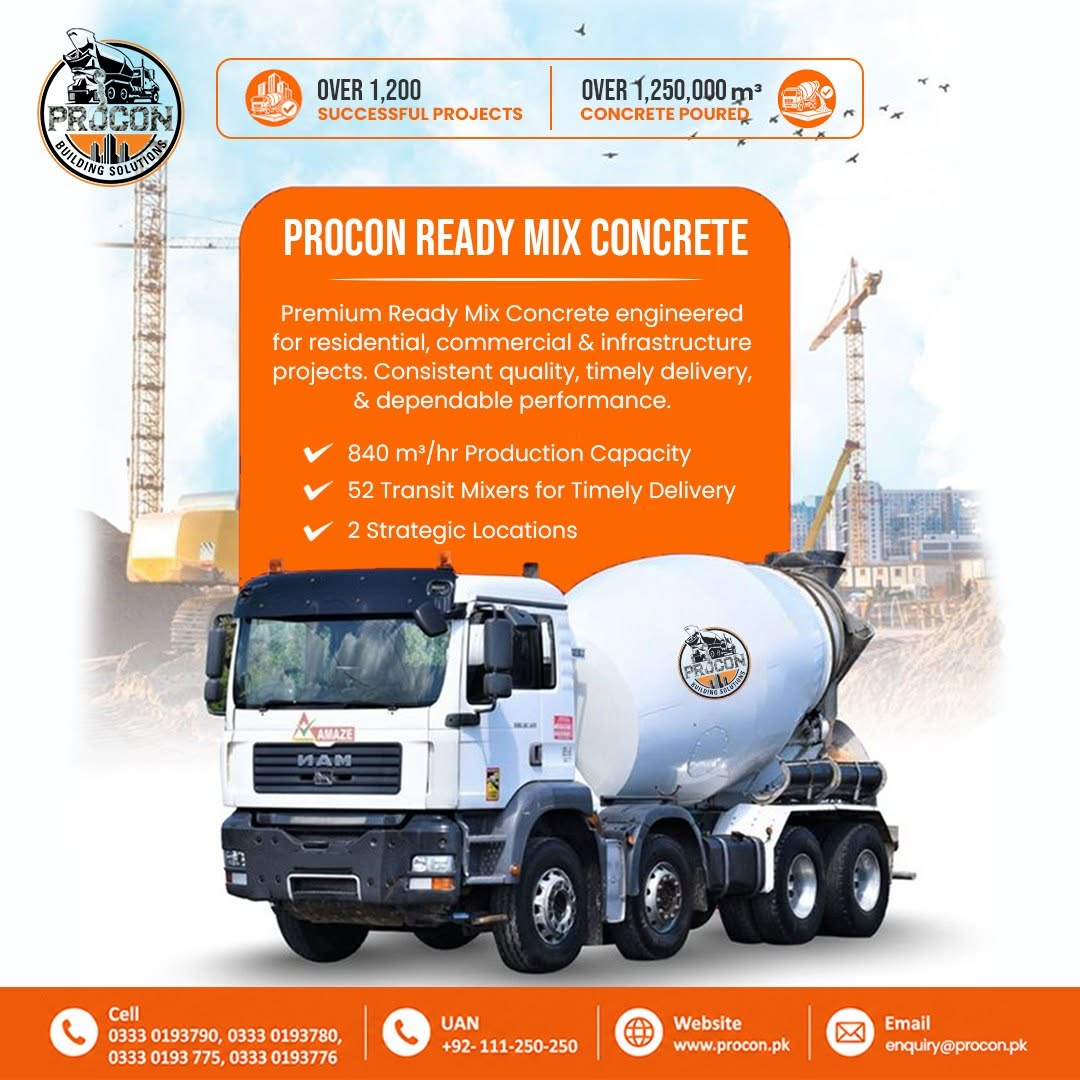
Concrete is the foundation of modern infrastructure, with aggregates making up roughly 60% to 75% of its total volume. While cement and water act as the reactive binding matrix, aggregates provide the essential structural skeleton that gives concrete its compressive strength, dimensional stability, and durability. Choosing improper sand, gravel, or crushed stone can compromise a building's integrity, leading to micro-cracking, excessive shrinkage, and early deterioration. By utilizing high-grade ready made concrete Karachi and applying rigorous aggregate selection standards, contractors ensure their structures withstand heavy loads and harsh environmental conditions over time.
1. Aggregate Grading and Particle Size Distribution
Achieving optimal concrete density depends heavily on selecting well-graded aggregates with a balanced distribution of particle sizes:
Optimizing Packing Density: Blending fine and coarse aggregates of varying sizes minimizes inter-particle voids, reducing the amount of cement paste required to coat aggregates and fill spaces.
Controlling Workability and Slump: Balanced particle distribution allows transit mixes to flow smoothly through pump lines and dense rebar cages without requiring extra water.
Reducing Drying Shrinkage: Maximizing aggregate volume through dense packing limits the volume of water-cement paste, which directly reduces shrinkage cracks as the concrete cures.
2. Particle Shape, Texture, and Structural Bonding
The physical characteristics of aggregates directly influence the mechanical bonding and rheological behavior of fresh concrete:
Angular vs. Rounded Aggregates: Crushed stone features angular edges that create strong mechanical interlocking, increasing flexural and compressive strength in high-load structural members.
Surface Texture and Interfacial Transition Zone (ITZ): Rough aggregate surfaces enhance the bond between cement paste and aggregate particles, creating a stronger ITZ capable of resisting heavy shear stresses.
Flakiness and Elongation Limits: Excessively flat or elongated particles weaken the structural frame, increase water demand, and cause segregation during pumping and consolidation.
3. Chemical Durability and Environmental Resistance
Selecting aggregates that are chemically inert shields concrete structures from aggressive ambient conditions and internal degradation:
Preventing Alkali-Silica Reactions (ASR): Avoiding aggregates containing reactive silica prevents expansive internal gel formation, which causes severe internal cracking and structural failure over time.
Resisting Marine and Saline Exposure: Non-porous aggregates resist chloride penetration, protecting embedded steel rebar from corrosion in coastal environments.
Low Absorption and Weathering Resistance: Hard, dense aggregates absorb minimal moisture, preventing surface scaling, freeze-thaw damage, and strength loss under severe thermal cycles.
4. Aggregate Cleanliness and Quality Control Standards
Unwashed or contaminated aggregates introduce impurities that jeopardize the chemical hydration process:
Eliminating Silt and Clay Impurities: Fine clay coatings on aggregate surfaces prevent proper cement paste adhesion, drastically lowering overall compressive strength.
Removing Organic Contaminants: Organic matter in unrefined sand delays initial setting times, weakening the long-term load-bearing capacity of the slab.
Testing and Batching Verification: Conducting regular sieve analyses, specific gravity checks, and abrasion tests ensures aggregates comply with international construction standards.
Conclusion
Strategic aggregate selection is a fundamental requirement for producing durable, high-performance concrete. By carefully evaluating aggregate grading, particle shape, chemical composition, and cleanliness, concrete producers optimize workability, maximize load-bearing capacity, and extend structural lifespans. Partnering with certified batching plants ensures that every delivery features scientifically tested, high-quality material blends engineered for demanding construction projects. To explore customized mix designs, high-capacity batching solutions, and reliable delivery for ready made concrete Karachi, visit procon today.
Survey No. 423, Ibrahim Hydri, behind Bol head quarter, Korangi creek road, Karachi-74900
+92 21 111 250 250