What Causes Concrete Segregation and How Can It Be Reduced?
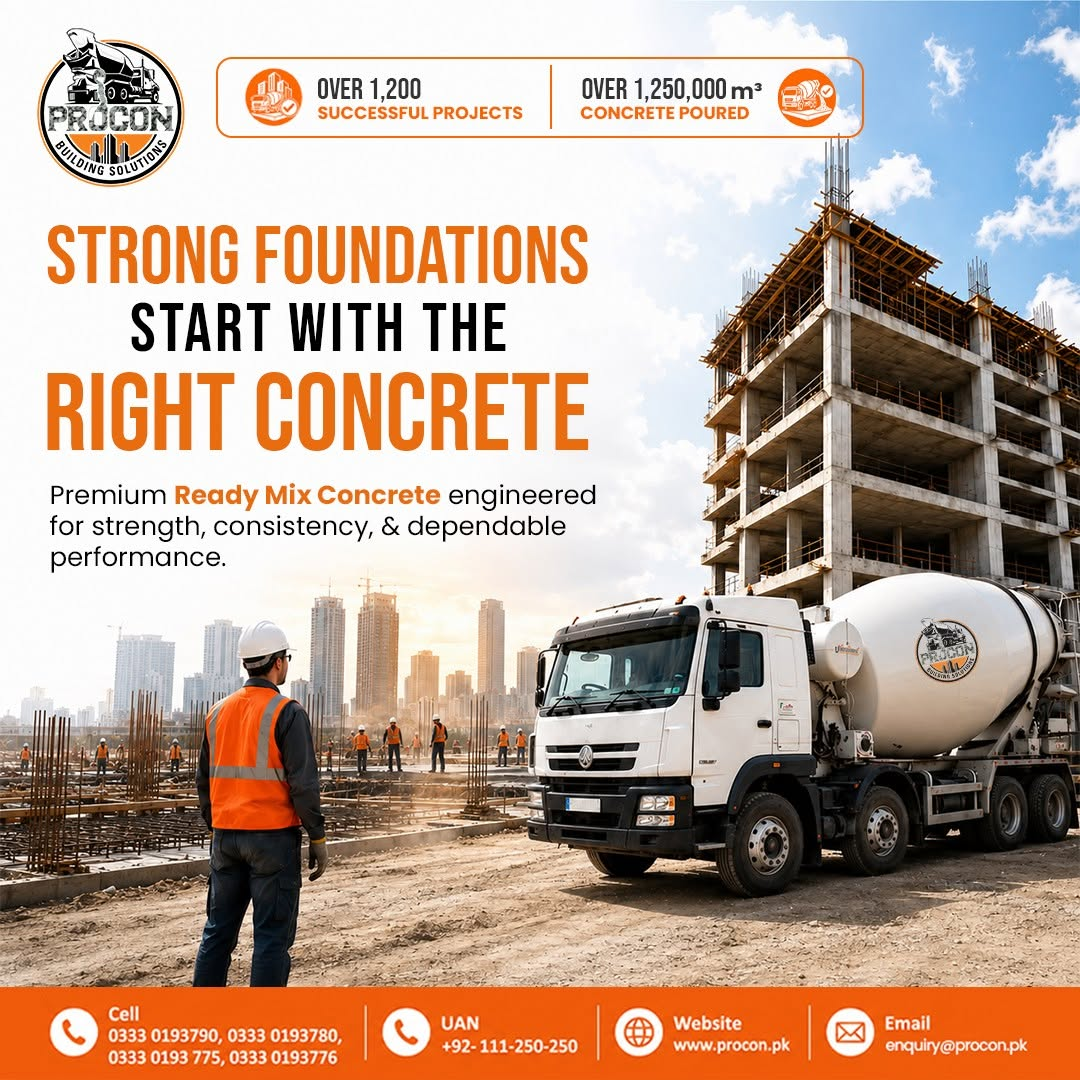
Structural safety, durability, and load-bearing capacity in modern building construction depend heavily on material uniformity. Whether constructing high-rise commercial towers, multi-family residential complexes, or sprawling industrial facilities, fresh concrete must maintain a homogeneous blend from batching to final consolidation. Concrete segregation—the separation of coarse aggregates from the cementitious mortar matrix—disrupts this uniformity, creating severe material weaknesses throughout structural columns, beams, and foundation slabs. Transitioning away from manual site mixing and utilizing certified ready made concrete Karachi gives contractors access to precise, computer-controlled batching and engineered mix designs that minimize material separation and ensure consistent, long-term structural performance.
Primary Causes of Concrete Segregation
Concrete segregation typically results from improper mix proportioning, excessive fluid addition, or mishandling during transport, placement, and compaction:
Excessive Water-Cement Ratio: Adding unmetered water on site to boost workability lowers mix cohesion, allowing heavy coarse aggregates to settle to the bottom while surplus water bleeds to the top.
Improper Aggregate Grading: A mix lacking well-distributed particle sizes—such as an excess of large coarse aggregates or a shortage of fine sand—fails to form a cohesive mortar matrix capable of suspending heavy stones.
Over-Vibration During Consolidation: Prolonged or improper use of mechanical internal vibrators forces heavy coarse aggregates downward while drawing fluid paste and water to the surface.
Improper Placement Techniques: Free-falling fresh concrete from heights exceeding 1.5 meters or discharging material at steep angles causes aggregates to bounce away from the mortar matrix.
Extended Transit and Long Line Pumping: Unstable mixes subjected to continuous vibration over long transit distances or extreme pumping pressure can segregate before reaching the formwork.
Structural Hazards of Segregated Concrete
Allowing segregated concrete to harden inside formwork introduces critical material defects that compromise building safety and longevity:
1. Honeycombing and Internal Air Voids
When coarse aggregates separate from mortar paste, they form clusters with unfilled voids between them. This honeycombing drastically reduces local compressive strength and compromises the structural integrity of load-bearing members.
2. Accelerated Steel Rebar Corrosion
Segregation creates porous pockets and weak surface layers with high capillary permeability. Subterranean moisture, airborne salts, and carbon dioxide penetrate these voids easily, oxidizing embedded steel rebar and causing expansive spalling over time.
3. Dusting and Low Abrasion Resistance
Water and fine cement paste floating to the surface create a weak, chalky layer known as laitance. Once cured, this surface layer lacks abrasion resistance, leading to constant dusting and surface scaling under traffic.
Effective Strategies to Prevent Concrete Segregation
Eliminating segregation requires strict quality control across mix design, batching accuracy, and job-site handling techniques:
Computerized Batching and Moisture Control: Industrial batching plants utilize digital sensors to measure aggregate moisture accurately, ensuring exact water-cement ratios and consistent batch-to-batch cohesion.
Incorporation of Viscosity Modifying Admixtures (VMAs): Adding chemical superplasticizers and VMAs enhances fluid workability without increasing water content, keeping heavy aggregates evenly suspended.
Standardized Job-Site Placement Procedures: Site crews must use tremie pipes or drop chutes for deep pours, keeping free-fall heights under 1.5 meters, and limit internal vibration to 5–15 seconds per insertion point.
Conclusion
Concrete segregation is a preventable defect that poses significant risks to structural strength and surface durability. By maintaining strict control over water-cement ratios, optimizing aggregate grading, and enforcing disciplined job-site handling and vibration procedures, contractors ensure that every pour cures into a dense, uniform structure. Partnering with established batching specialists like ready made concrete Karachi provides developers and site engineers with custom-engineered mix designs, certified laboratory quality assurance, and reliable transit logistics, laying a verified foundation for safe, durable, and high-performance construction outcomes.
Survey No. 423, Ibrahim Hydri, behind Bol head quarter, Korangi creek road, Karachi-74900
+92 21 111 250 250